 Mariposas
Mariposas vs Hevy
 By Zachary, builder of Mariposas
· Last updated June 2026
By Zachary, builder of Mariposas
· Last updated June 2026
Hevy is a generous free workout tracker with a social feed and shareable routines. It’s a genuinely good app. The difference is focus: Mariposas is built around motivation, it turns training into a game where you collect cute pets and outfits, keep a streak, and train with friends, so the hardest part of fitness (showing up) gets easier.
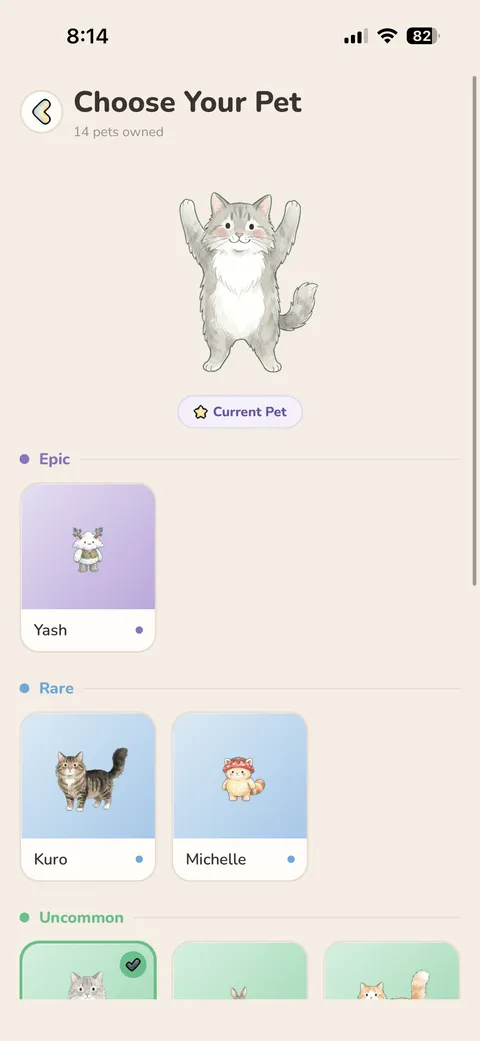
Track lifts, runs & classes and collect a pet for every session, free on iOS.
Download free on iOS| Mariposas | Hevy | |
|---|---|---|
| Focus | Gamified motivation + tracking (lifts, runs, classes) | A generous free workout tracker with a social feed and shareable routines |
| Gamification | ✅ Collect pets & outfits, streaks, friends | - |
| Good at | Keeping you consistent and making it fun | Free, full-featured logging; Social feed and routine sharing; Good exercise library |
| Price | Free | Generous free tier; Hevy Pro for advanced features |
The honest take
Where Hevy stands out: free, full-featured logging, social feed and routine sharing, good exercise library. Its social layer is feed-based, not a reward loop, there are no collectible rewards or pet/streak mechanics designed to build the habit itself.
Pick Hevy if you want a free, polished logger with a social-feed community and don’t care about gamification.
Pick Mariposas if consistency is your real obstacle, a pet for every workout, streaks and friends are built to make showing up stick.
Full disclosure: this comparison is published by the maker of Mariposas; we keep Hevy’s strengths honest so it stays genuinely useful.
What Hevy Gets Right
Hevy is a genuinely well-built workout tracker. The logging experience is fast and clean: you load a routine, hit sets, rest, repeat. The exercise library covers hundreds of movements with muscle diagrams, and you can build custom exercises when yours aren't listed. Volume and one-rep-max charts update automatically, so progress over months is visible without any manual math.
The social feed is a real differentiator among free apps. You can follow other lifters, share routines publicly, and pull workouts that someone else built directly into your own library. For a lifter who wants to browse proven programs or stay loosely accountable to a training community, that feed adds something most free loggers don't offer. The app also stays free for core features at a level that competitors often put behind a paywall.
On the pure data side, Hevy does its job well. If your goal is an accurate, searchable history of every set you've touched over the last two years, it delivers that reliably.
Where the Two Apps Are Solving Different Problems
Hevy is built around logging. Mariposas is built around the habit of showing up. That sounds like marketing framing, but the functional difference is concrete. In Hevy, you open the app when you're already heading to the gym. In Mariposas, the collectible pets, streak mechanics, and friend activity are designed to pull you toward the next session when motivation is flat.
Mariposas tracks real logged activity: lifted sessions, runs, classes. Each completed workout feeds into a streak and earns in-app rewards tied to a creature you're building over time. That reward loop is borrowed from behavioral research on habit formation. A Hevy social feed shows you what others did; Mariposas makes your own consistency the thing with stakes attached to it.
Neither approach is universally better. A lifter with twelve years of consistent training and a love for data probably doesn't need a streak to stay on track. Someone rebuilding a routine after a long break, or a person who knows they respond well to small, frequent rewards, might find the gamification layer genuinely useful rather than gimmicky.
Picking the App That Fits You
Choose Hevy if your primary need is a polished, free training log with a community attached. If you already have the habit locked in and want clean progress charts plus the ability to browse and share routines, Hevy handles that without costing anything. The social feed works best when you're looking for programming inspiration or mild accountability through visibility.
Mariposas fits better if you've noticed that motivation to start a session is where you lose consistency, not motivation to finish one. The collectible and streak design targets that specific friction point. It also suits people who want their friends in the same system so that social pressure flows through shared progress rather than a passive feed.
The two apps aren't really competing for the same use case. One person might reasonably use both: Hevy for detailed set-by-set logging and Mariposas for the accountability layer that keeps the streak alive.
FAQ
- Is Mariposas free to use?
- Mariposas offers free access to core features including workout logging and streaks. Some collectible content and advanced features may sit behind a premium tier. Hevy's core logging is also free, so cost alone shouldn't be the deciding factor between them.
- Can I use Hevy and Mariposas at the same time?
- Yes, and for some people that combination makes sense. Hevy's detailed volume tracking and exercise history are easy to rely on for the data side of training. Mariposas handles the habit and motivation layer separately. Logging in both does mean double entry, so it comes down to whether the added accountability is worth that friction.
- Does Hevy have any gamification or streak features?
- Hevy's engagement model centers on a social feed and shared routines rather than streaks, collectibles, or reward loops. You can see what others are training and share your own programs, but there's no in-app system designed to reward your personal consistency the way a streak or collectible mechanic does.
- Which app is better for beginners?
- Both work for beginners, but in different ways. Hevy gives a beginner access to a large exercise library and community routines they can follow, which is useful when you don't know what to program. Mariposas is more useful if a beginner's main challenge is building the habit of going regularly rather than knowing what to do once they're there. Many beginners face both problems, which is why the two-app approach comes up.